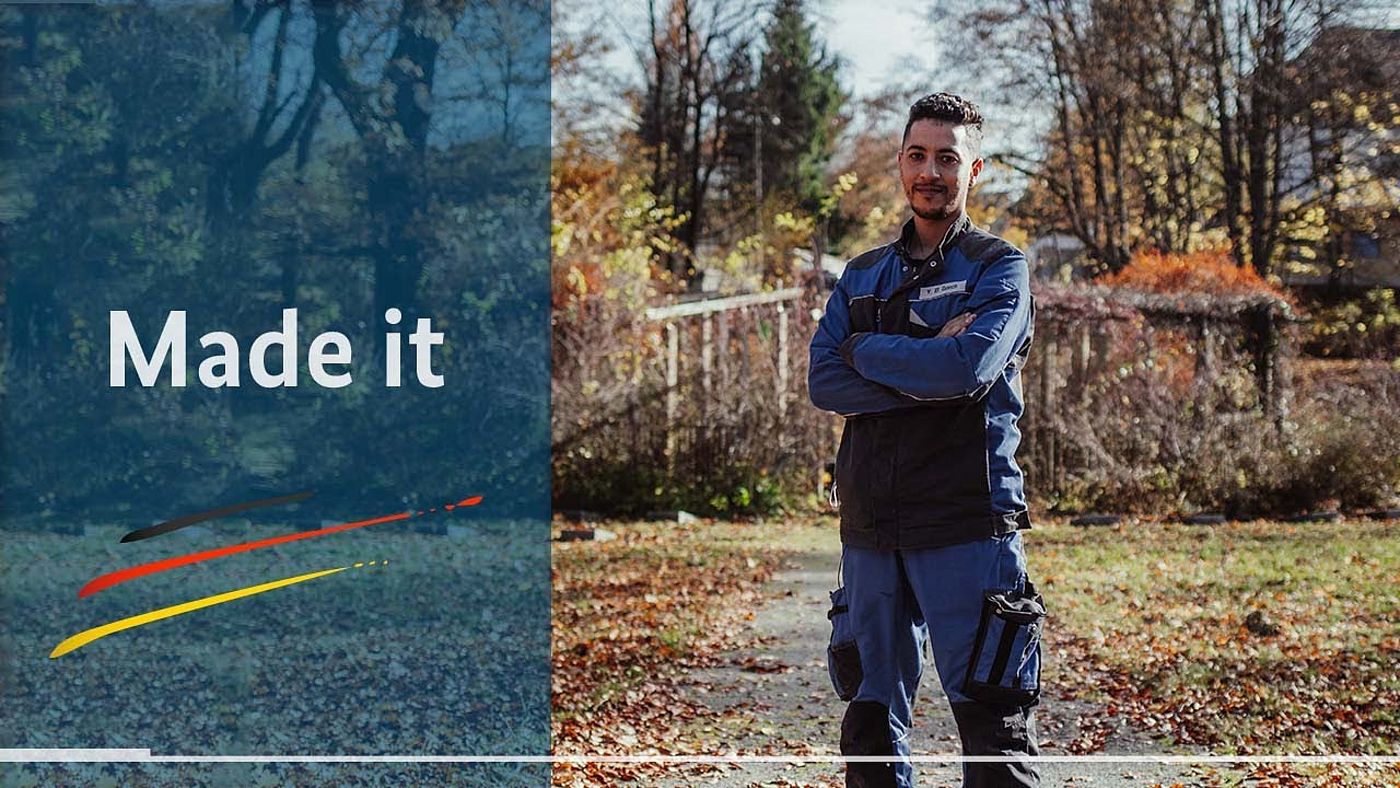
International students working on a trainee project

Vocational Training in Germany

With vocational training ("Ausbildung"), you start your working life with hands-on experience: you train in a company and at vocational school, gain valuable experience, and earn a recognised vocational qualification.

What you need to know

  • Theory, practical experience, and earning money: dual vocational training combines practical work at a company with lessons at a vocational school, including a monthly training allowance from the first day.
  • Key requirements: for a training place, you need a recognised school-leaving certificate and solid German language skills – usually at least level B1.
  • Visa for vocational training: once you have a training contract, you can apply for the visa for vocational training. Nationals of EU and EFTA states do not need a visa.
  • Good prospects for the future: after successfully completing their training, most trainees are taken on directly and have excellent prospects of staying in Germany permanently as a skilled worker.
Getting Started

What is dual vocational training in Germany?

Vocational training in Germany offers you a practical start to working life, with a recognised qualification and good prospects for the future. The most common model is dual vocational training: you learn at a company and at vocational school at the same time, and earn your own salary from the very start. Find out which training model suits you best.

Understand vocational training

Young apprentices work with metal in the company.
© goodluz - stock.adobe.com
Video Insights

Success story: from trainee to qualified professional in Germany

Step by Step

4 steps to vocational training in Germany

Here you will find all the key information to help you find your way around vocational training in Germany, covering the basics, the legal requirements, finding a job, and your career prospects. Get informed, and start your professional future in Germany well prepared.


  • 1

    Requirements for vocational training in Germany

    To get started, you will usually need a recognised school-leaving certificate and a sufficient command of German. If you are applying from a third country, you will also need a visa for vocational training.

    View requirements Read about visa for vocational training

  • 2

    How do I find a vocational training programme in Germany?

    Start your journey towards vocational training in a well-organised way: find out which vocational training programme suits your strengths, and search specifically for available vocational training places. Then prepare your application in line with German standards.

    Read tips for finding a vocational training programme

  • 3

    Find vacant vocational training places in the job listings

    Search specifically for vacant vocational training places for international applicants. The "Make it in Germany" job listings feature up-to-date vacancies from companies across Germany.

    View "Make it in Germany" job listings

  • 4

    Career prospects after completing vocational training in Germany

    A German vocational qualification opens up a wide range of opportunities for you: you can start working straight away in a company, undertake further training to become a master craftsman ("Meister") or a business specialist ("Fachwirt"), or go on to study at university – with good prospects for a long-term stay in Germany.

    View prospects

Information Material to Download

Your path to vocational training in Germany

At a glance: the visa and entry process for your vocational training

Five steps from visa application to residence title: this is how the visa and entry process works for studying in Germany – including deadlines, required documents and costs.

PDF, 1 page

Common Questions

FAQs on vocational training in Germany

View all FAQs

Smiling advisor with headset talking with a colleague at her desk
For your questions

Advice and Support

Do you have any questions about visas, jobs or life in Germany? Here you will find the right advice and support services: a hotline, a live chat, an email contact form, webinars and events, as well as in-person advice centres in Germany and abroad.

All services at a glance

The Port of Hamburg with ships and modern architecture – a symbol of openness, diversity and the welcoming culture in Germany.