Onboarding: Integrating International Skilled Workers into the Workplace
A good onboarding process makes it easier for international skilled workers to get started in your company. Find out how to support new employees from day one, strengthen teamwork and promote long-term integration.
The first few days at a company shape future collaboration. A structured onboarding process helps international skilled workers to take on their tasks independently, get to know German workplace and company culture, and build good relationships in the team.
Start onboarding when the contract is signed, and support the skilled worker at least until the end of the probationary period. Standardised processes, checklists and guides make induction easier and save time when you hire new staff. Training in intercultural cooperation can also improve understanding among your workforce.
Learn from the experience of other companies: for example, with the brochure “From the First Conversation to the 100th Working Day” (only available in German) from the “Unternehmen Berufsanerkennung” project. It contains an onboarding guide, practical tips and experiences from different companies.
You can find more tips on helping skilled workers to settle in successfully on “Make it in Germany” in the “Preparation & Support upon Arrival" section. You can also find inspiring practical examples in the “Finding Skilled Workers” section.

International Apprentices in Hospitality and Gastronomy
It's really about attracting new generations. And you have to train far more people than can later be employed long-term, because there is always natural turnover.
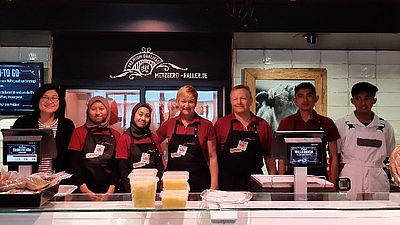
My name is Denny Amrhein and I run a family-owned hotel here. We are the fifth generation. I've been managing it for almost 20 years, I am also the owner and I still enjoy my work every day. We have about 85 employees across the two locations, and now more apprentices than ever, currently 23. And of those 23, seven come from non-EU countries. We are in the fortunate position of not having a shortage of skilled staff.
We also receive many applications directly from local schools. And we complement that with apprentices from third countries, because it's simply a good mix. It's truly enriching.
My name is Gautam, I am 25 years old, I am from Nepal and I am training as a specialist in restaurant and event catering. At work I have to speak German and I enjoy doing it, because when I speak German with guests I can learn something new. It was hard at first, yes.
I am Pascaline. I am from Togo and I am doing my training at Fuchsbräu. For me, cooking is something special. It can be a bit tiring, but I have learned a lot, I have met many people. I feel very comfortable here.
I am Ariatou and I am a cook. I work with my cousin at Fuchsbräu. Cooking, for me, is my life. I forget my problems, everything. I am in the kitchen, I cook for someone. Then someone eats and says: "Your food was good, delicious. Thanks, Ari!" It's that simple!
Starting out when new people arrive is naturally difficult, because the language is not fully mastered yet. But after six months, they relax enough to work really well together. They watch the work and just by observing, they copy immediately what we show them. Perfect.
At some point we noticed they did not speak enough German. So I quickly said: we need an internal German course, which we organize ourselves, and I knew the teacher. The motivation is high. They know that the course helps them work better, collaborate better, and improve the workplace atmosphere.
Week by week it was noticeable how they improved in grammar, pronunciation and also in how they communicate with each other.
My team is very helpful and when I don't understand something, they all help me and are very friendly. I also wanted to work professionally, and that is my goal: to gain as much experience as possible.
A future in my home country? No, I don't have one. But here in Germany I do have a future: I can work, I can earn money. Here I can do everything. The path of bringing in apprentices from third countries is really good. And we will surely continue doing it.
New apprentices are already being considered for next year, also relatives and acquaintances of current apprentices. It really is a good path for us, and we see that they are all very loyal and will probably stay after training. This way we secure our skilled staff for the coming years.
I can only recommend to our colleagues to try it too, to be open to the possibility of attracting apprentices from third countries. And here in Bavaria there is the ZSEF, which is really very helpful, offering a lot of support, and with the accelerated procedure for skilled worker immigration everything is completed within a reasonable timeframe. You just have to try it. That's what I would really advise everyone. You can only gain. What do you lose if you don't try?
Successful integration: retaining trainees in the hotel and catering sector in the long term
Organising welcome days
In practice, welcome days are a key part of onboarding. They help new employees to get to know their work environment and their future tasks. The first working day could look like this, for example:
- Welcome new employees: Greet them and introduce the team. Also name dedicated contact persons for the new skilled worker.
- Introduce the company: If you did not introduce the company in your first conversation with the skilled worker, now is a good time for a tour of the relevant areas and departments.
- Discuss tasks and introduce the workplace: Show the new employees their workplace and work equipment. Together, discuss the upcoming tasks and the next steps for the first few days. If necessary, clarify any open HR matters, such as core working hours, holiday arrangements and other company rules.
- Hand over the welcome folder: Use the free welcome folder from “Make it in Germany”. New employees can use the welcome folder for orientation and as a reference guide.
Plan integration beyond the first few days. An integration plan helps you to cover professional, language, cultural and social aspects in a systematic way. Regularly check with the skilled worker how their professional and personal integration is going. If needed, also involve their direct colleagues. This way, you can spot any need for support early on and improve your chances of keeping skilled workers in your company in the long term. Prepare for onboarding in a targeted way with the “Onboarding foreign skilled workers (External link) ” checklist (only available in German) to prepare for the onboarding process in a targeted manner.
New employees can find important information for their first days in Germany on the “Make it in Germany” web page for skilled workers in the “Arriving & Living” section.
Offering mentoring and everyday support
Mentoring programmes make it easier for international skilled workers to settle into the company. Dedicated contact persons help with questions about everyday work, teamwork and practical challenges in Germany.
Experienced employees are good mentors if they know the company and the region well or have immigrated themselves. Prepare your mentors for their role, for example, with training in intercultural communication. Also make clear early on which topics the mentor will cover and where they can direct the skilled worker for further questions.
Alternatively, an integration officer can support the skilled worker and the HR managers. This person can help the skilled worker with questions about everyday life in Germany and encourage their professional development.
You can find more information on “Make it in Germany” in the “Preparation & Support upon Arrival” section.
Using regional support services
Use regional advice centres to support the long-term integration of your international skilled workers. Welcome Centres, chambers, business development agencies and other contact points advise companies and skilled workers on topics such as arriving in the region, recognition of foreign qualifications, integration and a welcoming culture. They can also help you find suitable regional services and contacts.
Use the advice centre database (only available in German) on “Make it in Germany” to find contact points near you.
Diversity management in the workplace
Diversity management means a deliberate, strategic approach to diversity in the workplace – such as gender, age, origin or beliefs. There is no one-size-fits-all solution for diversity management: choose measures that suit your company and your workforce.
Tip: The Diversity Charter (External link) is a nationwide employer initiative that promotes diversity and appreciation in the world of work. Signing the charter makes you part of a nationwide network and gives you practical ideas for your own diversity work.
Strengthen the intercultural skills of your employees, for example through information sessions or further training. Language exchange partnerships and German courses can help to break down language barriers and make everyday teamwork easier. You can find more information about German courses at work on “Make it in Germany”.
Consider the different cultural and religious backgrounds of your workforce. Cultural or religious calendars can help you to give important holidays due consideration. Shared activities such as cooking, celebrating or sport encourage intercultural exchange and strengthen team spirit. This way, international skilled workers get to know their German colleagues better and can use their language skills in everyday situations.
The free INQA self-test “Diversity-Aware Company (External link) ” (only available in German) helps you to assess how well your company already uses the different perspectives and strengths of its employees.
Creating opportunities for further training
Further training helps you to qualify skilled workers to meet your company’s requirements and to retain them in the long term. It strengthens professional skills, shows appreciation for your employees’ abilities and can boost motivation and a sense of belonging.
Support the professional development of your international skilled workers beyond the induction period, too. Regular further training and transparent development opportunities encourage long-term cooperation and help you to secure the skilled workers you need.
Information on further training in companies is provided by the Competence Centre for Securing Skilled Labour (KOFA) (External link) . The Federal Employment Agency (External link) can advise companies on further training projects and provide funding for them.

Information on the web
-
-
KOFA (Centre of Excellence for securing qualified professionals)
-
International Society for Diversity Management

Do you have any questions?
Receive advice on recruiting skilled workers from abroad. Our experts will gladly help you.