Start-up advice, funding and support schemes in Germany
Thorough preparation increases the chances of success for your start-up. Seek advice, plan your capital requirements realistically and assess at an early stage which funding and grant schemes are suitable for your project.
Find the right start-up consultancy for your idea
Advisory services can help you assess your business idea, draw up a business plan and prepare for the next steps. In Germany, there are both public and private advisory services.
The Start-up Portal (External link) provides an overview of public advice centres. You can also use the Government Services Directory (External link) to search for advice centres in your area.
You can also engage a private consultancy firm. Some Federal states subsidise such consultancy services. You can find the eligibility criteria and relevant authorities on the (External link) Start-up Portal (External link) .
Practical tips for counselling sessions in Germany
Before the meeting, draw up a list of your most important questions and gather together all the relevant documents. Address business matters directly and describe your plans as specifically as possible. This will enable the adviser to tailor their advice to your particular situation.
Advice for entrepreneurs from migrant backgrounds
Entrepreneurs with a migrant background can find regional and national support services in the ‘Starting a Business with a Migrant Background’ (External link) section of the business start-up portal. The Centre for Migrant Economy (External link) also provides information on starting a business in Germany.
Women wishing to set up a business can find information on the portal for female entrepreneurs (External link) about advice, funding opportunities and networks.
Further training
To engage in self-employment, you’ll need business skills, for example in bookkeeping, accounting and business management. Seminars and further training courses can help you build up any missing knowledge or refresh your existing skills.
You can find courses in your region through the Chambers of Industry and Commerce (External link) and the Chambers of Skilled Trades (External link) , amongst others. Further courses are offered by KURSNET (External link) and Adult (External link) education centres (External link) .
Advice after setting up your business
Even after you’ve started your business, you can still make use of advisory services, for example to improve business processes or further develop your business planning.
The business portal (External link) of the Federal Ministry for Economic Affairs and Energy (BMWE) provides an overview. The public-sector banking group KfW (External link) also offers numerous programmes to support young entrepreneurs.
For investors and businesses: Entering the German market
Germany offers excellent prospects for internationally active companies planning to expand into Germany by setting up a subsidiary or branch. You can find detailed information and support on this on the Germany Trade & Invest (External link) website.
How to finance your start-up in Germany
Once you have determined your capital requirements, you should plan your financing strategy. When doing so, take into account both the one-off set-up costs and the ongoing expenses during the start-up phase. The Start-up Platform (External link) provides an overview of financing options.
Equity and debt
A basic distinction is made between equity and debt capital. Your equity (External link) is the financial foundation of your business. It comprises your personal assets (e.g. cash and savings) and items that you contribute to your business (e.g. machinery and equipment).
As a general rule, the more of your own funds you have, the more independent you are. Ideally, equity should account for at least 20 per cent of total capital. For banks, equity serves as security. Surveys show that ‘insufficient collateral’ and ‘too little equity’ are the most common reasons why banks reject a loan application.
You can obtain borrowed capital, for example, as a loan from a bank or building society. The type of loan that is suitable depends, amongst other things, on the amount required, the term and the business model. Interest rates and other terms and conditions are also based on the lending institution’s risk assessment. You can find a suitable lending institution, for example, on the start-up platform (External link) .
The longer the term and the higher the bank assesses the risk to be, the higher the interest rates you will have to pay on the loan. A convincing business plan is an important basis for the financing discussion.
Further information on capital requirements and possible financing options can be found on the start-up portal (External link) .
These funding schemes support start-up founders
Germany supports start-up founders through funding programmes. These generally take the form of public funding loans, which offer you more favourable terms in terms of interest rates, loan periods or repayment, for example. To be eligible to apply for funding, both your place of residence and your business operations must be located in the Federal Republic of Germany.
Start-up entrepreneurs in Germany can access the following funding programmes:
Types of funding
- Funding loans, for example microloans (External link) and federal funding loans (External link)
- Guarantees (External link)
- Equity capital, for example via the Mikromezzaninfonds Deutschland (External link) or the High-Tech Gründerfonds (External link) Other financing options
- Non-repayable grants: start-up grants, start-up allowances, grants for technology- or knowledge-based (External link) start-ups.
In the funding database (External link) of the Exitenz start-up portal, you can search specifically for programmes run by the federal government, the federal states and the European Union.
Further guidance is available via the KfW’s product finder (External link) and the start-up platform’s funding programme finder (External link) . An overview of the Federal states’ funding agencies can be found at investitionsbank.info (External link) .
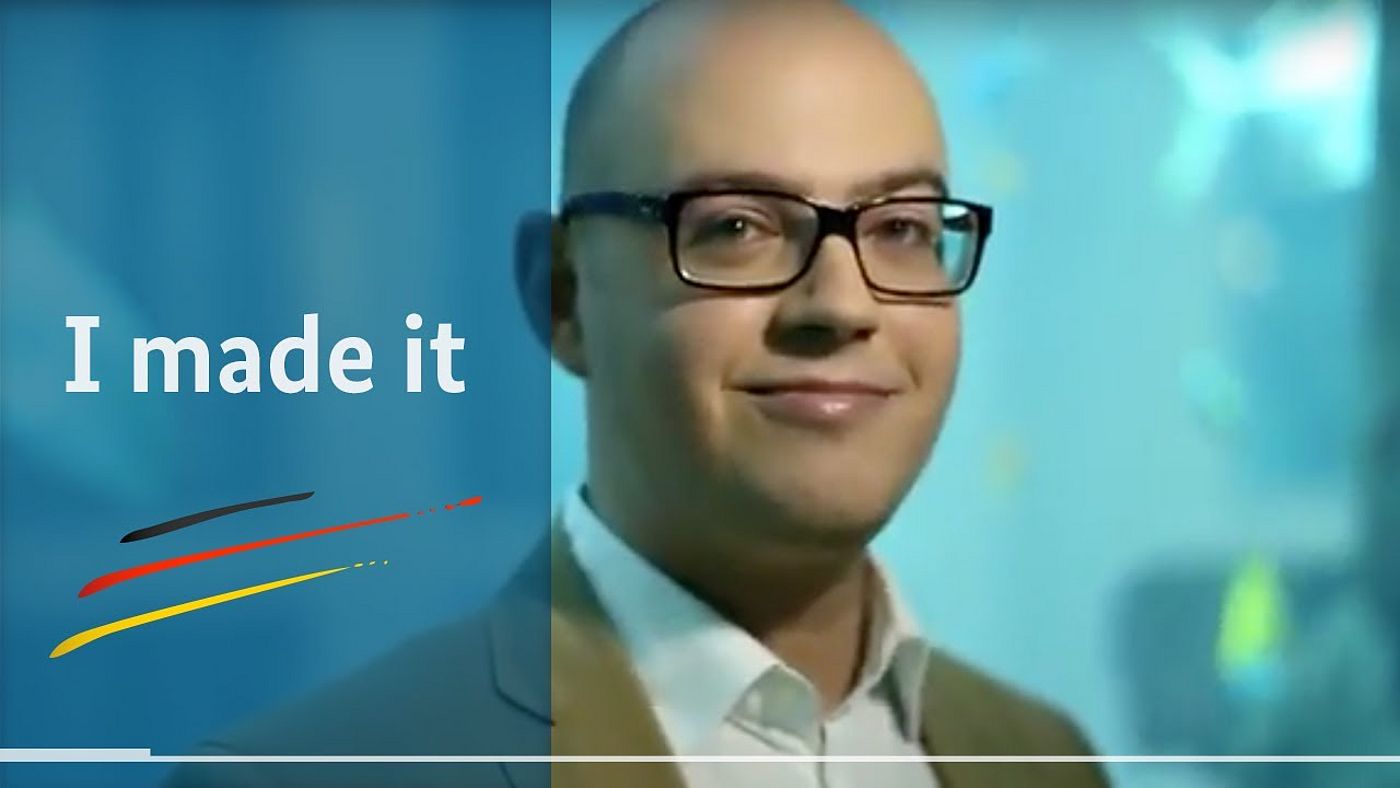
Video: entrepreneur Matan shares his experience